Does Your Gloucester Home Qualify for a Free Heat Pump in 2026?
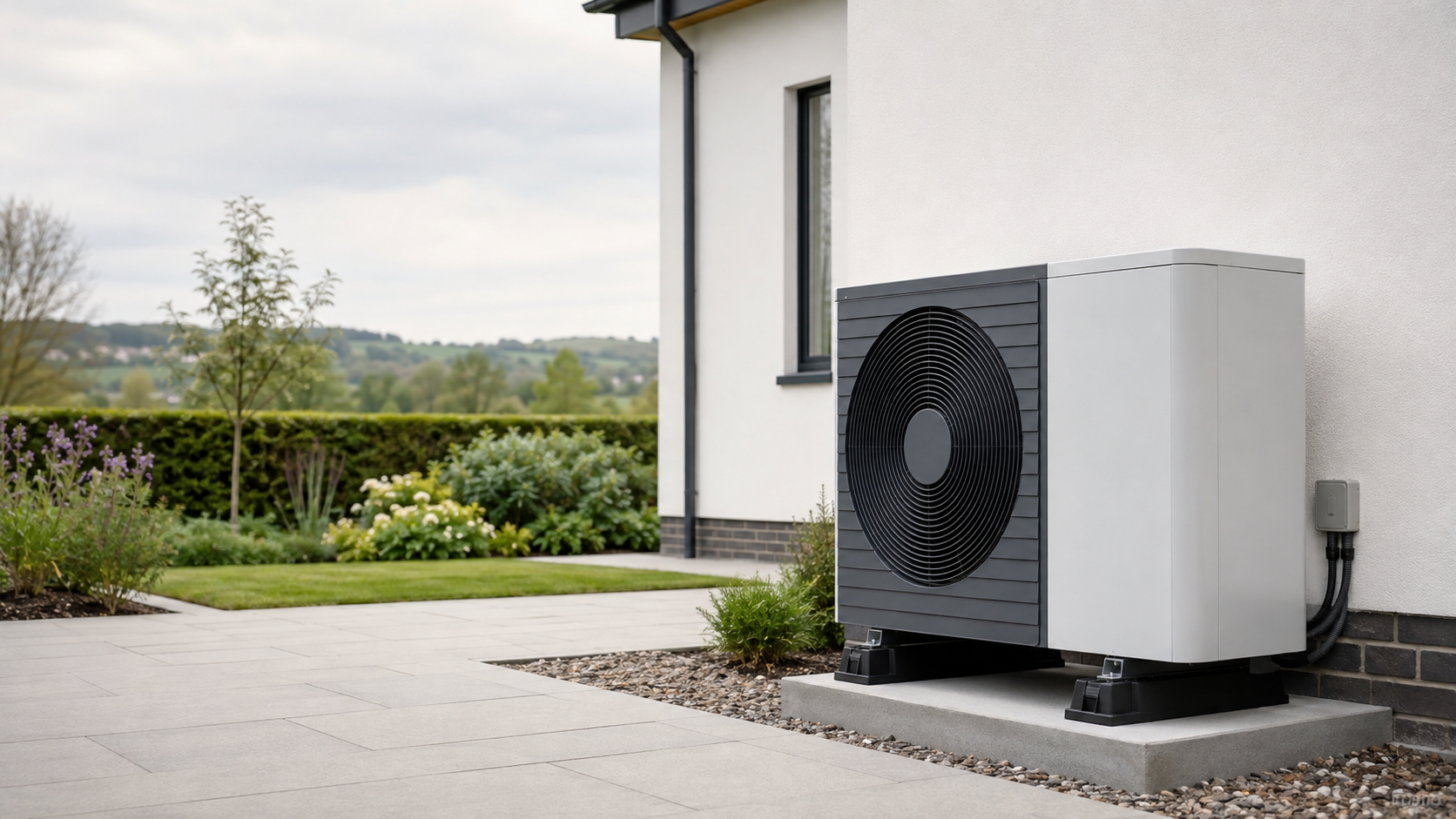
It's a frosty morning in a Gloucester terrace. The old boiler clatters into life, the radiators tick and groan, and you stand there in your dressing gown watching your breath while you wait for the kitchen to warm up. Then the winter energy bill lands, and you start wondering if there's a smarter way to heat the place. If you've seen the headlines about grants and "free" heat pumps and you're not sure what's genuine, this is my honest, no-nonsense rundown of where you'd actually stand.
The heat pump question I keep getting asked
More and more people around Gloucester are asking me the same thing: can I get a heat pump for nothing, and is it worth the hassle in an older house? It's a fair question, and there's a lot of noise around it. Some of what you read online is genuinely useful. Some of it is the same scare-story, hard-sell nonsense I try to steer people away from.
So let me be straight with you from the off. There is real government-backed funding that helps with the cost of an air source heat pump. For some households it can cover most or even all of the bill. For others it's a healthy chunk off the price rather than a freebie. The word "free" does apply in certain cases, but it depends on your circumstances and your property, not just on filling in a form.
What "free" actually means
Think of the funding in two broad buckets, a bit like the difference between a discount voucher and a full sponsorship.
A grant off the price. The main route most homeowners look at is a government scheme that knocks a set amount off the cost of installing an air source heat pump when you're replacing a gas or oil boiler. You still pay the difference, so it's money off rather than money for nothing. It's aimed at ordinary owner-occupiers, not just people on a low income.
Fully or largely funded installs. There are separate, means-tested schemes designed for households on certain benefits, on lower incomes, or living in homes with poor energy ratings. These can cover far more of the cost, and this is where the genuine "free" cases usually come from.
Here's my honest caveat: the exact grant amounts, the qualifying benefits, and the paperwork all change over time, and they can shift again heading into 2026. I'm not going to quote you a figure that might be out of date by the time you read this. Always check the current criteria on the official government pages before you get your hopes up or write it off.
Why Gloucestershire's older homes need a closer look
This is where local knowledge matters, because a lot of our housing stock around Gloucester and out into the villages wasn't built with modern heating in mind.
Heat pumps work brilliantly, but they run best in a home that holds onto its warmth. A heat pump is a bit like a slow, steady radiator that gently keeps the place topped up, rather than a gas boiler that blasts out heat in short bursts. If your warmth is leaking straight out through solid walls, single glazing, or a draughty loft, the system has to work harder and your running costs climb.
Many older Gloucestershire properties have:
- Solid brick or stone walls with no cavity to fill
- Original or aging windows that let heat slip away
- Smaller radiators sized for a hot gas boiler, not a lower-temperature heat pump
- Loft or floor insulation that's thin, patchy, or missing entirely
None of that rules out a heat pump. It just means the honest answer is often "yes, but sort the insulation and maybe the radiators first." A good installer should tell you that up front rather than dropping a heat pump into a leaky house and leaving you with a big bill and a cold lounge.
Interested in home battery or heat pump installation in Gloucester?
Call us on 07969 359683 for a free, no-obligation quote — or WhatsApp us directly.
A quick checklist: does your home look like a good candidate?
Before you spend an afternoon chasing grant forms, run through these. The more you can tick, the stronger your position.
- You're replacing a fossil-fuel system. Most grant routes are aimed at swapping out a gas, oil, or LPG boiler.
- You own the property (or have the owner's agreement if it's a rental).
- Your insulation is reasonable, or you're willing to improve it. Loft and, where possible, wall insulation make a huge difference to how well a heat pump performs.
- You've got somewhere to put the outdoor unit. It needs a bit of space with airflow around it, usually against an outside wall or in the garden.
- Your energy rating and circumstances fit the scheme. For the fully-funded routes, this often ties to benefits or a low energy rating. For the standard grant, it's more about the boiler swap.
If you're on the fence, it's worth checking your property's current energy performance rating, since several schemes lean on it. And if you've already been thinking about solar or a home battery, it's worth planning those together, because running a heat pump on your own generated power is where the long-term savings really start to stack up. I've written more about that in my piece on whether home battery storage is worth it long term.
Common pitfalls I'd want you to avoid
I've seen enough energy upgrades go sideways to know where people get caught out. A few honest warnings.
Assuming "free" means no strings. Even a fully funded install usually comes with eligibility checks, an assessment, and specific approved installers. If someone knocks on your door promising a totally free heat pump with no questions asked, be wary.
Skipping the insulation conversation. Anyone who quotes you for a heat pump without asking about your walls, loft, and windows is doing you a disservice. Fixing the fabric of the house first is like putting a lid on a saucepan before you turn up the heat. It's the unglamorous bit that makes everything else work.
Undersized radiators left in place. Heat pumps run at a lower temperature than gas boilers, so some rooms may need bigger radiators or the pipework tweaked. If that's ignored, you get rooms that never quite feel warm.
Chasing the grant instead of the right solution. For some older or hard-to-heat homes, other steps might make more sense first, or alongside. I'd always rather flag that honestly than push you toward the option with the biggest headline number attached.
Juggling too many trades. Insulation, electrics, pipework, plastering after the work, tidying up the outside unit's surroundings. That's several jobs, and coordinating separate contractors is where projects stall. Having one accountable person keep it all moving saves a lot of headaches.
Common questions
Will a heat pump really keep an old Gloucester house warm in winter? Yes, provided the home is reasonably insulated and the system is sized correctly for the property. The mistake is expecting the same instant blast you get from a gas boiler. A heat pump likes to run steadily, keeping the place at a comfortable temperature rather than firing up and dying down.
Do I need planning permission? Many domestic heat pump installations fall under permitted development, but there are conditions around noise, siting, and distance from boundaries, and listed buildings or conservation areas can be different. It's always worth checking before you commit, especially with some of our older and protected properties around the county.
Is a heat pump the same as air conditioning? They're cousins. Air conditioning is essentially an air-to-air heat pump that can cool and warm rooms, while a heat pump for your central heating warms your radiators and hot water. If year-round comfort is your goal, it's worth understanding both, and you can read more about how cooling works on my air conditioning page.
How long does the funding side take? That varies with the scheme and how busy things are. The sensible move is to check current eligibility early, because criteria and deadlines can change from one year to the next.
"Excellent service. Really quick to come round and started the job the next week. Really neat and tidy job. Would recommend Matt."— Helen Brooke, Google Review
The practical takeaway
So, does your Gloucester home qualify for a free heat pump in 2026? For some households, genuinely yes. For many others it's a solid grant toward the cost rather than a total freebie, and the smart play is to get your insulation and radiators sorted so the thing actually performs once it's in. Check the official, current government criteria before you count on any figure, and be cautious of anyone selling you a dream with no assessment behind it.
If you're weighing up whether your home is ready, and you'd like a straight, no-pressure opinion on what actually makes sense for your property, get in touch for a no-obligation chat and I'll tell you where you stand, plainly.