Why a Home Battery Can Save You Thousands Over Time
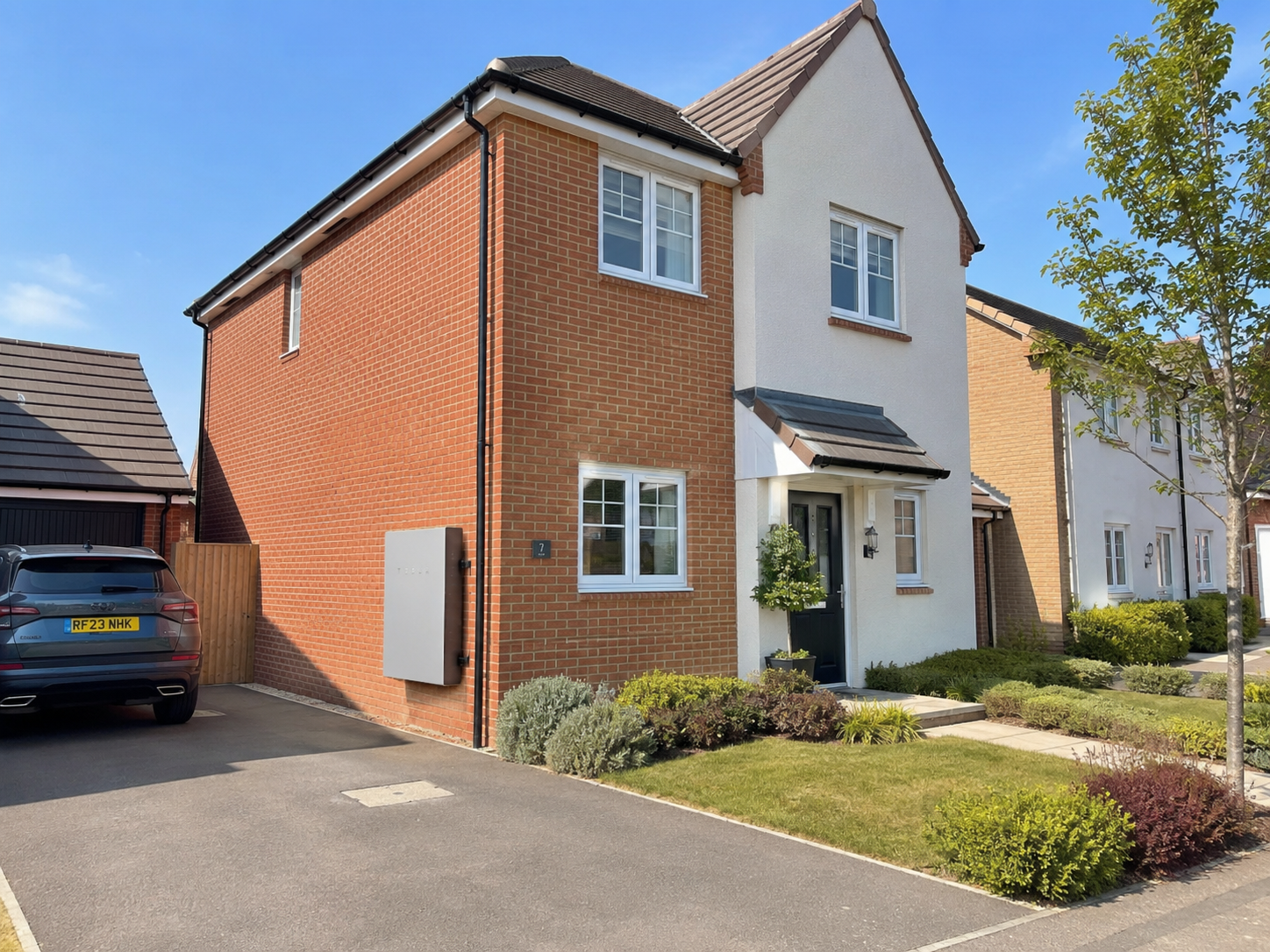
Picture a bright Saturday in June. Your solar panels are pumping out more electricity than your house can use, so most of it quietly flows back to the grid for pennies. Then the evening comes, the kettle goes on, the telly's running, and you're buying that same electricity back at full price. If that sounds familiar, a home battery is the piece that's missing, and over the years it can put a serious amount of money back in your pocket.
I've fitted solar and battery systems on homes right across Gloucester and the surrounding villages, and this is one of the questions I get asked most. So let me walk you through how a home battery actually saves money, when it makes sense, and what to think about before you spend a penny.
What a home battery actually does
Think of a home battery like a rainwater butt, but for electricity. When your panels make more power than you need during the day, instead of letting it run off to the grid, you store it. Then in the evening, when the sun's gone and the house is at its busiest, you draw from that store rather than buying from your supplier.
Without a battery, a typical solar setup only lets you use the electricity you generate in real time. That's usually the middle of the day, which for most working families is exactly when nobody's home. A battery shifts that free energy to when you actually need it. In simple terms:
- Daytime: panels charge the battery and run the house
- Evening and night: the house runs off the stored energy
- Grid: only tops you up when the battery's empty
That single change is where most of the long-term saving comes from. You stop selling cheap and buying dear.
Where the savings really come from
People assume the saving is just "free evening electricity", but there are a few layers to it, and they stack up over the life of the system.
1. Using more of your own solar. Most homes without storage only self-consume a fraction of what their panels produce. A battery pushes that figure right up, so far more of your generation offsets what you'd otherwise pay for.
2. Charging cheaply overnight. Even in winter, when your panels are quieter, many time-of-use tariffs let you charge the battery when electricity is cheapest, often in the small hours, then run the house on that during peak-rate evenings. You're essentially buying at the low price and avoiding the high one.
3. Riding out price spikes. Energy prices have been anything but steady in recent years. A battery gives you a buffer, so a jump in the unit rate hits you less hard than it hits a neighbour with no storage.
4. Fewer surprises. Some systems keep a reserve so that if the power cuts out, your essentials stay on. That's not a cash saving as such, but if you've ever lost a freezer full of food in a Gloucestershire winter outage, you'll understand the value.
None of these are dramatic on any single day. It's the compounding, month after month, year after year, that turns them into thousands over the lifespan of the system.
Interested in home battery installation in Gloucester?
Call us on 07969 359683 for a free, no-obligation quote — or WhatsApp us directly.
Why the long game matters more than the sticker price
A battery is an upfront cost, there's no getting around that. But judging it on day one is like judging a car purely on the price of the first tank of fuel. The real question is what it does over ten or fifteen years.
Every unit of electricity you don't buy from the grid is money saved at whatever the price is that year. If energy costs stay high or climb, your saving grows with them. That's the bit people miss: a battery is partly an energy bill and partly a hedge against future prices. The longer you own it, the more of your original outlay it earns back, and after the payback point, the savings are effectively yours to keep.
So when someone asks me "is it worth it?", my honest answer is: it depends on how long you plan to stay in the house and how you use energy. If you're settled in an older village property and not going anywhere for years, the maths tends to look after itself.
Does it work with the local housing stock?
A lot of the homes I work on around Gloucestershire are older, and I know the worry: "my house is too old for this sort of thing." In practice, a battery doesn't care how old your walls are. It needs a sensible, ventilated spot to live, a sound electrical connection, and a bit of planning around where cables run.
With older properties the trickier part is usually the fabric of the building and the existing wiring, not the battery itself. That's exactly the kind of multi-trade puzzle I enjoy sorting out, because I can look at the roof, the electrics, and the space all at once rather than sending three different firms who each blame the other. A battery can be added to an existing solar array or fitted as part of a fresh solar and inverter install, so you're not locked in to one path.
Sizing it right: bigger isn't always better
This is where a lot of money gets wasted. Buy a battery that's too big for your household and you're paying for capacity you'll rarely fill. Too small, and you're back to buying evening electricity sooner than you'd like. Getting the size right is the single biggest factor in how good your return turns out to be.
When I size a system, I look at:
- Your actual usage. How much electricity you get through, and crucially, when.
- Your solar generation. A bigger array can justify more storage; a modest one doesn't.
- Your daily pattern. A house that's empty all day and busy at night behaves very differently from a home-working household.
- Your tariff. If you can charge cheaply overnight, that changes the sums.
It's a bit like fitting a bathroom. You don't order the suite before you've measured the room. Get the measuring right and everything after it is easier and cheaper.
Solar first, or battery first?
If you already have panels, adding a battery is usually the quicker win, because you've got free daytime generation going spare. If you're starting from scratch, it often makes sense to plan solar and storage together so the inverter, panels, and battery are properly matched from the off rather than bolted together later.
Either way, the goal is the same: keep as much of your own energy as possible and buy as little as you can at peak prices.
Common questions
How long before a battery pays for itself? It varies with your usage, your tariff, and energy prices, so I won't throw a false number at you. What I can say is that the higher your evening usage and the more solar you have going unused, the faster the payback. I'll always talk you through the realistic picture for your home rather than a sales figure.
Will a battery power my whole house in a blackout? Some setups can keep essential circuits running during an outage, others are designed purely for bill savings. It depends on the equipment and how it's wired, so it's worth flagging up front if backup power matters to you.
Do I need to replace my roof or panels to add storage? Not usually. A battery works alongside an existing array. If your roof needs attention that's a separate conversation, and being one person across roofing, electrics, and solar, I can check both at the same visit.
How much space does it take? Less than most people expect. A tidy wall or floor spot in a garage, utility room, or plant space is often plenty. We plan the location around ventilation and cable runs before anything's fixed.
"Excellent service. Really quick to come round and started the job the next week. Really neat and tidy job. Would recommend Matt."— Helen Brooke, Google Review
The practical takeaway
A home battery isn't a gadget, it's a way of stopping the slow leak of money that happens every evening when you buy back power you could have kept. Sized correctly and installed properly, it quietly works in the background for years, and it's that long run, not the first bill, that turns it into real savings.
If you're weighing it up, the best starting point is a proper look at how your household actually uses energy and whether your current or planned solar can support storage. Because I run every job myself from start to finish rather than handing you to a call centre, you get one person who can look at the whole picture and give you a straight answer. If you'd like that conversation, get in touch and tell me about your property, and I'll help you work out whether a battery stacks up for your home. You can also browse more practical guides on the blog while you're deciding.