Why a South-Facing Pergola Keeps Your House Cooler
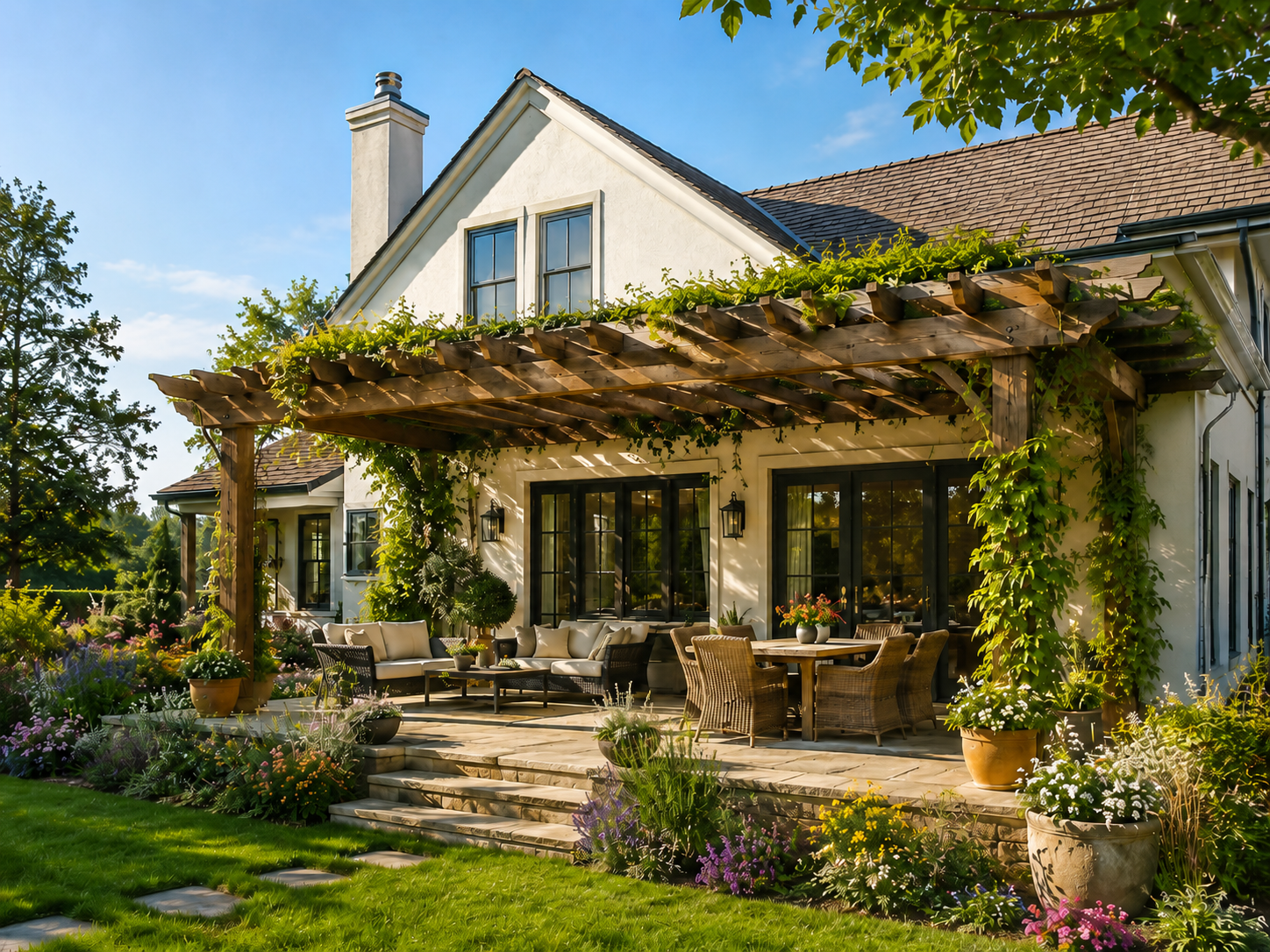
By mid-afternoon in summer, the rooms on the south side of the house turn into a greenhouse. The sun sits low enough to pour straight through the glass, the sofa gets too warm to sit on, and you end up drawing the curtains just to take the edge off. A pergola on that side of the house does more than give you a shaded spot to sit. Positioned properly, it stops a lot of that heat before it ever reaches the window. Here's how it actually works and what to think about before you build one.
The heat problem starts at the glass
Most of the summer heat you feel indoors doesn't creep through the walls. It comes through the windows as direct sunlight. When the sun hits south-facing glass, that energy passes straight through and warms up everything inside the room: floors, furniture, walls. That warmth then radiates back out and the room stays hot long after the sun has moved on. It's the same reason a car left in the sun cooks even with the windows cracked.
So if you want a cooler house, the smart move is to block the sunlight before it hits the glass, not after. Once it's through the window, it's already become heat you have to live with. This is the whole principle a well-placed pergola works on. It acts as a shade in front of the glass, so the sun never gets the chance to turn your living room into a heat trap.
Why the south side is the one that matters
In Gloucester, the sun tracks across the southern sky through the day and sits highest around midday. South-facing windows get the longest, most intense exposure, which is exactly why those rooms are the ones that overheat. West-facing rooms cop the low evening sun, and east-facing rooms warm up in the morning, but the south side takes the brunt of it for hours at a time.
That's good news for a pergola, because the high summer sun is the easiest to block. When the sun is high, even a modest overhead structure with slats or planting casts shade right across the window. And here's the part that makes a pergola cleverer than a solid awning: in winter, the sun sits much lower in the sky. It slides in underneath the pergola and still reaches your windows, so you keep that welcome warmth and light during the colder months when you actually want it. You get shade when you need it and sun when you don't.
How a pergola does the cooling work
There are a few things going on at once, and it helps to understand them so you build the right kind:
- It shades the glass directly. The overhead beams, slats or climbing plants sit between the summer sun and the window, cutting the direct sunlight that would otherwise heat the room.
- It shades the wall and paving. Brick, render and patio slabs soak up heat and hold onto it, then release it back at the house well into the evening. Keeping that surface in shade means less stored heat sitting against your home.
- It lets air move. Unlike a closed lean-to, an open pergola doesn't trap hot air against the house. Warm air rises and drifts away rather than building up under a roof.
- It cools the air around it, if you plant it. Train wisteria, grapevine or a leafy climber over the top and the plants add another layer of shade while their leaves release moisture, which takes a little of the sting out of the air right by the window.
Put those together and you've got a structure that meaningfully lowers how hot the adjoining rooms get, without a single watt of electricity.
Getting the design right so it actually works
A pergola only cools the house if it's built for the job. A purely decorative one plonked in the wrong spot looks nice but does little for the temperature indoors. A few things make the difference:
- Position it to cover the windows. It needs to sit close enough to the house and high enough to throw shade across the glass through the middle of the day, not just over a patio ten feet away.
- Choose the right slat angle and spacing. Angled or closely spaced slats block more of the high summer sun while still letting light filter through. Adjustable louvred roofs give you the most control, but even fixed slats set at the right angle do a solid job.
- Think about depth. The further the pergola projects from the wall, the longer into the day it keeps the window shaded as the sun moves.
- Plan for planting if you want it. A climber needs a sturdy frame and a few seasons to fill out, so build the structure strong enough to carry the weight of mature growth.
- Match the materials to the house. Timber, powder-coated aluminium and hardwood all behave differently over Gloucestershire winters. The right choice depends on the look you're after and how much upkeep you're willing to do.
Getting these details right is the difference between a pergola that genuinely takes the heat off your rooms and one that's just a nice place to stand.
Thinking about adding a pergola or outdoor space in Gloucester?
Call us on 07969 359683 for a free, no-obligation quote — or WhatsApp us directly.
A pergola versus running the air con
Plenty of people reach straight for air conditioning when a room overheats, and there's a place for that, especially in home offices or rooms that face the wrong way with no room outside for a structure. But cooling a room that's being flooded with sunlight is like bailing out a boat without plugging the hole. You're paying to fight heat that a bit of shade could have stopped for free.
The sensible approach is usually to deal with the sunlight first and then size any cooling to what's left. Shade the windows with a pergola, and a room that used to need constant cooling might not need much at all. Where cooling still makes sense, it does far less work and costs less to run. We handle both sides of that, from landscaping and garden structures through to air conditioning supply and installation, so it's worth weighing up the whole picture rather than defaulting to one fix.
Build it as part of the garden, not bolted on
A pergola works best when it's thought of alongside the rest of the outdoor space. The paving underneath, the drainage, the way it ties into a patio or seating area, and how it frames the view from inside all matter. Done well, it becomes a proper outdoor room that shades the house and gives you somewhere genuinely usable through the warmer months.
This is where having one person oversee the whole thing pays off. When the groundwork, the structure and any planting or electrics are handled together, nothing falls through the gaps between separate contractors. Matt works hands-on across landscaping, patios and garden rooms rather than passing bits to subcontractors, so the pergola sits level, drains properly and does the job it was built for.
A few common questions
Will a pergola make my garden feel darker? No. Because it's open and slatted rather than solid, it filters light rather than blocking it. You get dappled shade underneath and full daylight around it.
Do I need planning permission? Most freestanding or attached pergolas fall under permitted development, but height, position and boundaries all come into it, and it varies by property. It's worth checking before you commit, and Matt will flag anything that needs looking into on your specific plot.
When's the best time to build one? Spring is ideal so it's ready before the summer heat and gives climbers a full season to establish. That said, the quieter, cooler months are a good time to get one designed and installed while we're less stretched with autumn and winter roofing and repair work.
Timber or aluminium? Timber looks warm and natural and suits most Gloucestershire homes, but needs occasional treating. Aluminium costs more up front and needs almost no maintenance. Neither is wrong; it comes down to your budget and how hands-on you want to be.
"Excellent — really good job, would definitely recommend."— Dawn Worrall, Google Review
The practical takeaway
If the south-facing rooms in your house overheat every summer, the answer isn't heavier curtains or a bigger fan. It's stopping the sunlight before it reaches the glass, and a well-placed pergola does exactly that while giving you a shaded spot to enjoy the garden. The key is building it in the right position, at the right height, with the right slats or planting to catch the high summer sun.
If you're weighing one up for your place, Matt is happy to come and look at how the sun tracks across your garden and talk through what would work. No pressure and no hard sell, just honest advice on whether a pergola is the right call for your home.