How Long Does a Bathroom Renovation Take? A Gloucester Builder Explains
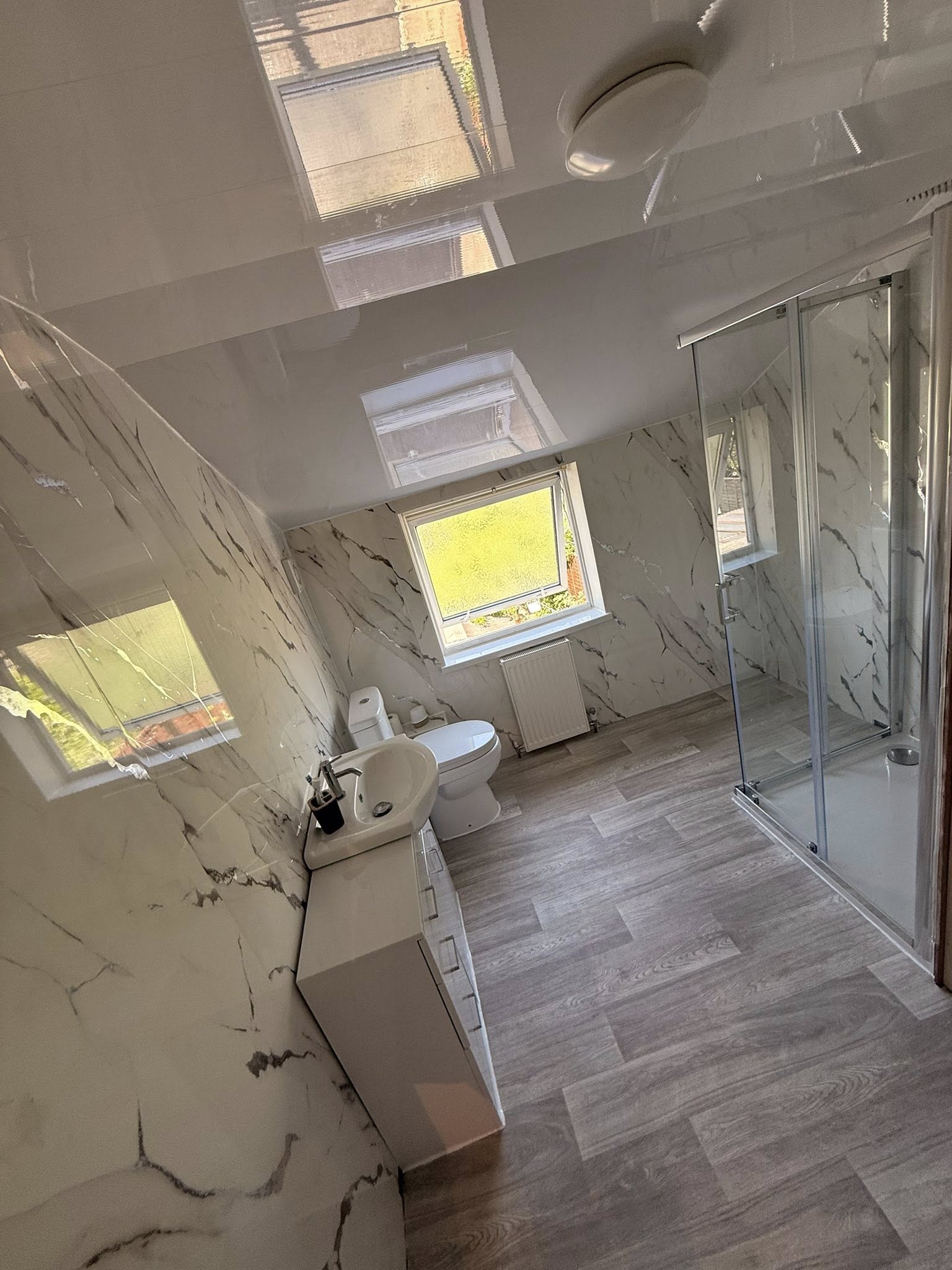
You've finally decided to sort out that tired bathroom, and the first thing running through your head is a simple question: how long am I going to be without it? Maybe it's the only bathroom in the house, or maybe winter has made the cold, damp, mouldy corner impossible to ignore any longer. Either way, you need a realistic idea of how many days the disruption lasts. Here's how it actually works, day by day, so you can plan around it properly.
The honest answer depends on the scope
When people ask how long a bathroom takes, they're usually picturing one clean number. The truth is a straight swap and a full strip-out are two very different jobs, and lumping them together is how you end up disappointed.
A like-for-like refresh, where the bath, toilet and basin stay in roughly the same spots and you're mostly updating tiles, fittings and a bit of paint, is the quick end. A full renovation, where we move plumbing, change the layout, re-plaster, retile floor to ceiling and rewire for new lighting or an extractor, sits at the longer end.
As a rough guide for a standard family bathroom in a Gloucestershire home:
- A simple refresh: around one week of actual work.
- A full renovation with new layout: roughly two weeks.
- A larger or more complex job, such as a knocked-through en-suite or awkward pipework in an older property, can run beyond that.
Those are working-day estimates, not calendar promises. A week of work can still stretch across more days once you factor in things drying and setting, which I'll come to.
Understand the real order of work
Most of the timeline confusion comes from not knowing what has to happen in sequence. A bathroom isn't one job. It's a stack of trades that have to follow each other in the right order, and each one needs the last one finished before it can start.
Here's the sequence followed on a typical full renovation:
- Strip out. The old suite, tiles and anything coming away gets removed. Usually a day, sometimes less. Older Gloucester houses can throw up surprises behind the tiles here, which is worth knowing.
- First fix plumbing and electrics. This is the hidden work: moving pipes for the new layout, running cables for lights, the shower and the extractor. It happens while the walls are open, so it has to be done before anything gets covered up.
- Plastering. Walls and ceiling get made good so you've a flat, sound surface to tile and paint. This is the step people forget when they underestimate the timeline.
- Drying time. Fresh plaster needs to dry before it's painted, and adhesive and grout need time to cure. This is the bit you can't rush no matter how many people are on site.
- Tiling. Floors and walls. On a fully tiled bathroom this is often the biggest single chunk of time.
- Second fix. The suite goes in, taps and shower are connected, sockets and lights are fitted, everything gets wired up and tested.
- Sealing and finishing. Silicone, final paint, clean-up and the snagging check.
When you see it laid out like that, it's obvious why a full job takes a couple of weeks. Nobody's dragging their feet. It's simply that plaster and adhesive don't care about your schedule.
Planning a bathroom renovation in Gloucester?
Call us on 07969 359683 for a free, no-obligation quote — or WhatsApp us directly.
Why drying time is the part people underestimate
This is the single biggest reason a bathroom "takes longer than I thought". You can have a brilliant crew working flat out, and there will still be days where the honest thing to do is wait.
Plaster needs to properly dry before paint goes on, or the finish fails. Tile adhesive needs to set before you grout, and grout and silicone need to cure before the room gets wet again. Push any of these and you're not saving time, you're booking yourself a repair job in six months.
Think of it like a plaster cast. You wouldn't test a healing arm the day the cast comes off. Same principle. Building in these pauses is what gets the job built right, first time, and it's a big part of why a bathroom you rush rarely stays looking good.
What can stretch the timeline
A few things reliably add days, and most of them are worth knowing before you start so they don't feel like a nasty shock.
- Moving the layout. Shifting the toilet or shower means new drainage and pipe runs, which is more first-fix work and more making good.
- Hidden problems. Rot, old leaking pipework or dodgy previous wiring behind the tiles. Common in older Gloucester and Gloucestershire housing stock, and always better fixed properly than tiled over.
- Special order items. A particular tile, a made-to-measure screen or a specific suite that's on a long lead time. The fitting is quick; the waiting for delivery isn't.
- Fixing cold and damp properly. If your old bathroom suffered with condensation and mould, doing it right means a decent extractor fan, proper ventilation and sometimes better insulation. That's more work than a cosmetic redo, but it's the difference between solving the problem and papering over it.
- Changes mid-job. Deciding on a different tile once work has started resets part of the sequence. Nail the decisions early and the job flows.
How the right team keeps it moving
Here's where a lot of bathrooms go wrong, and it's got nothing to do with the actual building. It's coordination.
On a typical renovation you've got a plumber, an electrician, a plasterer and a tiler. When those are booked separately, or through a big firm that strings together a chain of subcontractors who don't talk to each other, you get gaps. The plasterer turns up before the first-fix is done. The tiler's booked for a day the walls aren't ready. Everyone points at everyone else, and your one-week job drifts into a month.
The way MNM works, one accountable person oversees the whole job from strip-out to the final seal. The plastering has to be dry before the tiler starts because the same person is scheduling both. That's quality workmanship without the middleman prices, and it's the single biggest thing that keeps a bathroom on track. If you want to see how a project gets mapped out before any tools come off the van, the bathroom renovation planning guide for Gloucester homes walks through the decisions worth making early.
Can you still use the bathroom while it's being done?
Usually not for the middle stretch, and it's better to plan for that honestly. Once the suite's out and the plumbing's off, the room's out of action until second fix. If it's your only bathroom, the smart move is to sort a temporary arrangement for that window, whether that's a downstairs loo, a family member nearby or planning the job around a time you can manage.
You'll always get a clear picture up front of which days the water's off and when the room's usable again, so there are no surprises halfway through.
Common questions
Can a bathroom be done faster if I pay more? Only to a point. More hands help with stripping out and tiling, but no amount of money speeds up plaster and grout curing. Anyone promising a full renovation in two days is skipping steps you'll pay for later.
Is it quicker to keep the same layout? Yes, noticeably. Keeping the toilet, bath and basin where they are avoids new drainage runs and cuts down first-fix and making-good time. If speed matters to you, that's the biggest lever you can pull.
When's the best time of year to do it in Gloucestershire? There's no wrong season, but winter is when a cold, damp bathroom nags at you most, so a lot of people tackle it then. Just bear in mind fresh plaster can take a touch longer to dry in a cold house, so keeping the heat and ventilation sensible helps.
Do you handle the whole thing or just parts? The whole thing. Plumbing, electrics, plastering and finishing all sit under one roof, which is exactly what keeps the sequence tight and the timeline honest.
"He has transformed what was a cold damp and grotty bathroom I was ashamed of into being my favourite room in my house. Thank you Matt, you're a star."— Meg Seg, Gloucester, Google Review
The practical takeaway
If you remember one thing, make it this: a bathroom's timeline is set by its sequence and its drying times, not by how fast anyone swings a hammer. A simple refresh is about a week; a full renovation is usually two to three. The jobs that overrun are almost always the ones where nobody was coordinating the trades.
The most useful next step is a proper look at your actual bathroom, because the layout, the age of the house and what's hiding behind the tiles all shape the real answer for you. If you'd like a straight, no-pressure estimate of how long yours would take and what it involves, get in touch and we'll take a look. No job too small, and no guesswork dressed up as a promise.