Kitchen Renovation in Gloucester: What to Plan Before You Start (and Where to Save)
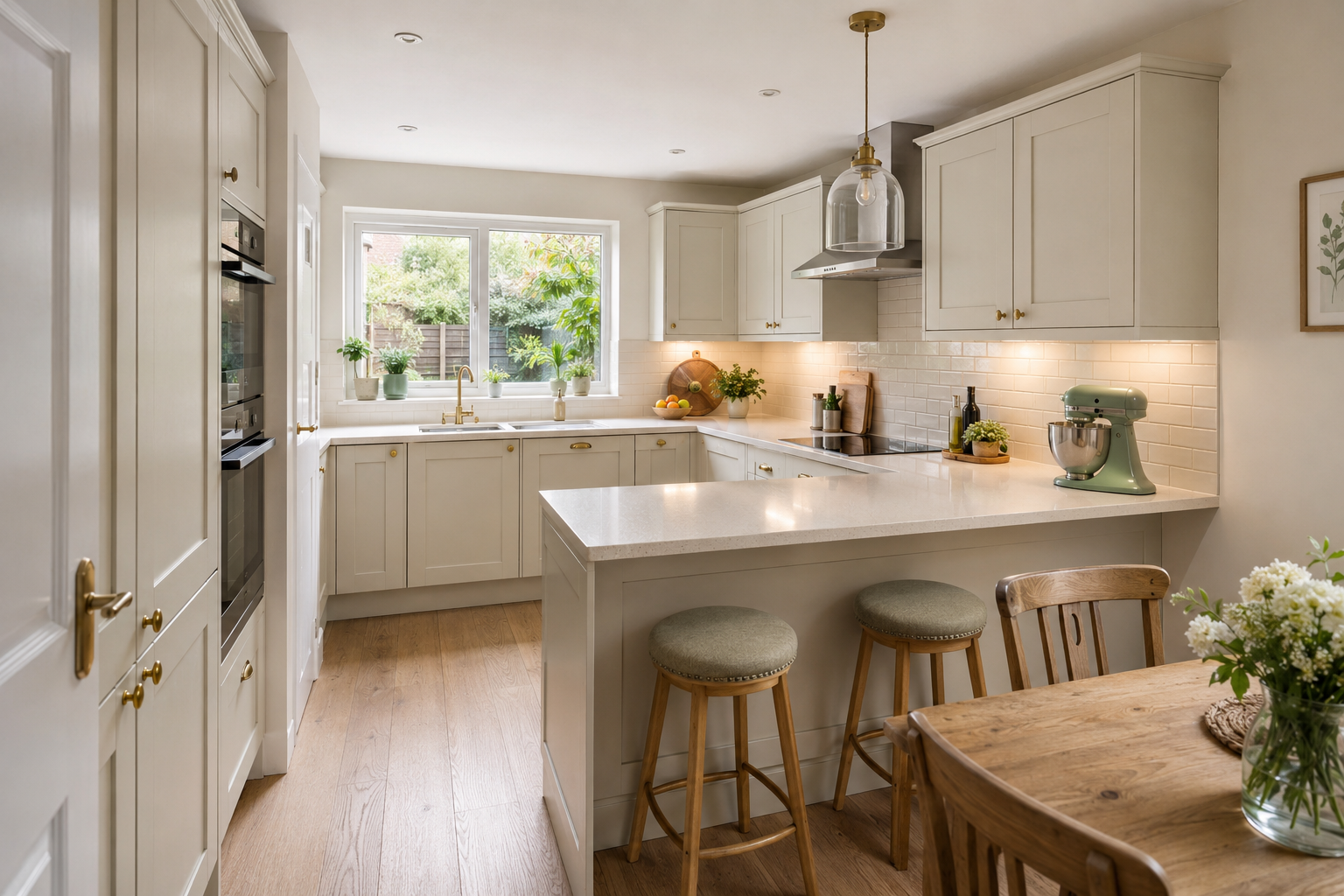
Picture your kitchen at seven on a Monday morning. The kettle's on, someone's hunting for a clean bowl, a cupboard door hangs slightly off its hinge, and the worktop by the sink has that swollen edge where water's crept in over the years. You've been meaning to sort it for ages. Before you rip anything out, though, a bit of planning saves you real money and a lot of stress. Here's what I'd want you to think about first.
Start with how you actually use the room
Most kitchen budgets get blown not on tiles or taps, but on changing your mind halfway through. So before you look at a single brochure, spend a week watching how your kitchen really works.
Where do you drop the shopping? Where does the bin want to live? Do two people cook at once, or is it one cook and a crowd of hungry onlookers? Older Gloucestershire houses often have kitchens that were carved up decades ago into small, awkward spaces, and the layout you inherited isn't always the one that suits you.
Ask yourself these before anything else:
- Do you need more storage, more worktop, or more floor space to move around?
- Is the current layout genuinely broken, or does it just look tired?
- Would moving the sink or hob mean shifting plumbing and electrics?
That last point matters more than people expect. Keeping your sink, hob and appliances roughly where they already are is one of the biggest savings you can make. Moving them means new pipework, new wiring, and sometimes chasing into walls that don't want to cooperate, especially in properties with solid walls and decades of previous 'improvements' hiding behind the plaster.
Sort out what's behind the units before the pretty bits
This is the part national showrooms rarely dwell on, because it's not glamorous. But a kitchen is only as good as what sits behind it.
When units come off the wall, it's the ideal moment to check the boring, important stuff. Is the plaster sound? Are there old, iffy sockets that should be replaced while everything's open? Is there any damp creeping in behind the run of cupboards by an outside wall? Fixing these things now, with the room already stripped back, costs a fraction of what it does once your shiny new kitchen is sitting on top of them.
I'd rather flag a problem early and let you decide than paper over it. That's the honest way to do it, and it's why I like being on site myself rather than sending a stranger who's never seen your house.
Worth checking with the units out:
- Wiring and socket positions for appliances
- Plumbing runs and isolation valves
- Wall condition and any signs of damp
- Whether the floor is level enough for new units
Where the money really goes
People often think the cabinets are the big cost. Sometimes they are. But the total usually splits across a few areas, and knowing that helps you spend where it counts.
Cabinets and worktops are the visual heart of the room. You can spend a fortune here or be sensible, and the trick is putting your money into the bits you touch every day. A solid worktop earns its keep. Fancy internal drawer gadgets, less so.
Labour and the trades covers the plumbing, electrics, plastering, tiling and fitting. This is where using one accountable person instead of five separate ones tends to pay off, because the jobs get sequenced properly and you're not paying for gaps, no-shows, or one trade blaming another.
The surprises are the third bucket, and every honest builder tells you to keep a little back for them. Older homes especially throw up things you can't see until you open them up. A sensible contingency means a surprise is an inconvenience, not a crisis.
Thinking about a kitchen renovation in Gloucester?
Call us on 07969 359683 for a free, no-obligation quote — or WhatsApp us directly.
Simple ways to save without regretting it
Saving money on a kitchen isn't about buying the cheapest of everything. It's about being clever with the big decisions and not cutting corners where you'll feel it later.
Keep the layout, change the look. If your existing layout works, a new set of doors, worktops, a fresh tiled splashback and good lighting can transform the room for far less than a full re-plan. You'd be surprised how new most kitchens look with the plumbing left exactly where it is.
Mix your spending. Put budget into the worktop, the tap and the flooring — the things that take daily punishment — and be thriftier on decorative extras you could add later.
Don't move the boiler or the stack unless you must. Relocating services is one of the priciest changes, so only do it when the payoff is genuinely worth it.
Do the disruptive jobs together. If you're already having walls opened up, that's the moment to add a socket you've always wanted or improve the lighting. Doing it later means paying twice for the mess.
Cut out the middleman. A lot of what you pay a big national firm goes on office overheads, sales commission and subcontractor markups rather than the actual work. Because I run things hands-on with none of that stacked on top, the same quality often comes in lower. That's not a gimmick, it's just simple maths.
Plan around the disruption, not around the pretty pictures
A kitchen is the one room you can't easily do without. No sink, no oven, no fridge in its usual spot. So think through how you'll cope while the work's happening.
Good planning here means the trades come in the right order, materials arrive before they're needed, and the room isn't sitting untouched for days waiting on one delayed delivery. This is where the habits from my ten years in the REME and RAF genuinely help. Careful planning, everything checked and ready, and a realistic timeline given up front rather than an optimistic one designed to win the job.
I'd always rather tell you a kitchen will take a fortnight and be right than promise a week and leave you living out of the microwave for a month. If you want a feel for how these timelines work in practice, my write-up on how long a bathroom renovation takes follows the same honest logic, and kitchens run on a similar rhythm.
Think about the whole room, not just the kitchen
While everything's torn out is also the smartest time to tackle jobs that touch the kitchen but aren't strictly 'kitchen' work.
Maybe the back door leaks a draught. Maybe you've always wanted a bit of the garden reworked so you can actually get to the bins without a mud bath in winter. Maybe you're weighing up better lighting, or even how the room stays cool through those sticky Gloucester summer afternoons. Bundling sensible extras into one visit saves you the cost and hassle of separate call-outs later.
Because I cover a broad range of trades under one roof, from plumbing and electrics through to plastering and landscaping, you're not stitching together five different diaries and hoping they all show up on the right day. It's one point of contact, and one person accountable if something needs putting right.
Common questions
How far ahead should I plan a kitchen renovation? Give yourself time to settle the layout and choose materials before any work starts. Rushed decisions made mid-project are what push budgets up. A few weeks of thinking beats a few weeks of regret.
Can I keep using part of my kitchen during the work? Sometimes, depending on the layout and how much is being changed. A temporary setup with a kettle, microwave and fridge in another room makes life a lot easier. Talk it through early so it can be planned in rather than improvised.
Is it cheaper to refit or fully rip out and start again? If your layout works and the units are sound underneath, a refit with new doors, worktops and finishes is usually the better value. A full strip-out makes sense when the layout genuinely doesn't work or there are problems hiding behind the units.
Do I need to move the plumbing and electrics? Only if you're changing where the sink, hob or appliances live. Keeping them roughly in place is one of the simplest ways to keep costs down.
"You explain an idea, he looks at the room for five minutes and comes back with a solution ten times better than what you imagined. Absolute genius at what he does."— The Colour Room Gloucester, Google Review
The practical takeaway
A kitchen you love comes from planning the boring bits well, not from picking the flashiest tiles. Work out how you really use the room, keep the layout if it serves you, put your money into the surfaces you touch daily, and deal with the hidden stuff while the walls are open. Keep a little back for surprises, especially in older Gloucestershire homes, and use one accountable person rather than a chain of subcontractors.
If you're weighing up a kitchen and want an honest opinion on what's worth doing and what isn't, I'm happy to come and take a look and talk it through, with a free quote and no pressure. You can see how I approach room-by-room planning in my bathroom renovation planning guide, or get in touch when you're ready to chat it over.